WHAT IS GOING ON?
MPA PETITION 2023-29
Create New Mishopshno SMCA To Allow Chumash Take And Recreational Shore Fishing Take Only
Recommendation: REJECT
SUMMARY:
This requests a new MPA be created at Carpinteria and would be a tribally allowed SMCA that would be closed to non-federally recognized tribal fishing (general recreational and commercial fishing, also local Chumash bands not federally recognized would be excluded). The petition’s three primary arguments for the new SMCA are to meet habitat connectivity/MPA spacing requirements, to protect habitat surrounding juvenile white shark grounds, and to allow for tribal access. Allowed shoretake removes any connectivity benefits the petition claims it wants to accomplish, the claim of whitesharks is irrelevant due to the FGC already ruling on this in the same area in 2020 with another MPA petition, and the so-called gap in the network the petition claims is over the maximum MPA spacing is false when you actually measure it on a map.
DIG DEEPER….
Petition 29 requests a new MPA be created at Carpinteria. This MPA would be a tribally allowed SMCA that would be closed to non-federally recognized tribal fishing (general recreational and commercial fishing); the petition was amended to reduce its overall size and allow shore-based take of finfish. The petition’s three primary arguments for the new SMCA are to meet habitat connectivity/MPA spacing requirements, to protect habitat surrounding juvenile white shark grounds, and to allow for tribal access. While tribal co-management of all California MPAs should be considered, we believe for the following reasons this specific MPA proposal should be rejected.
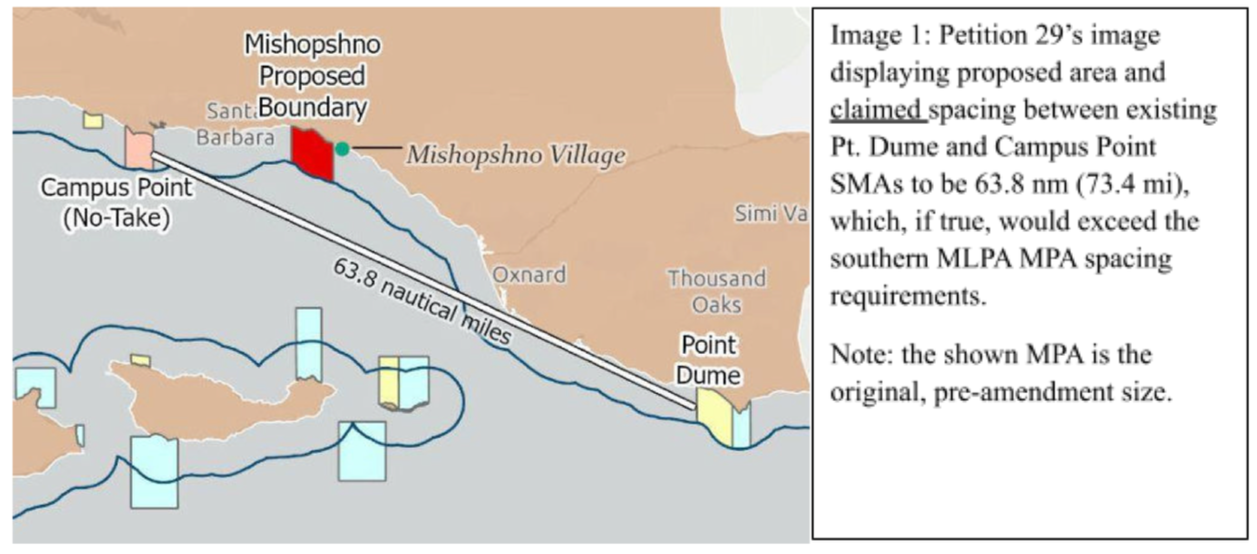
Regarding habitat connectivity, the petition asserts that the spacing of the existing MPA network exceeds the recommendations set by the MLPA scientific advisory team, which suggests a minimum spacing of 31 to 62 miles. The petition argues that the nearest coastal MPAs, Campus Point and Point Dume, are too far apart, claiming they are separated by 63.8 nautical miles or 73.4 miles (Image 1).
Discussions with the CDFW clarified that MPA spacing is measured by the, “shortest distance over water between two MPAs.” When measuring the distance between Campus Point and Point Dume, we find that it is in fact less than 62 miles, indicating that the current spacing distribution is adequate along the coast (see below Image 2).
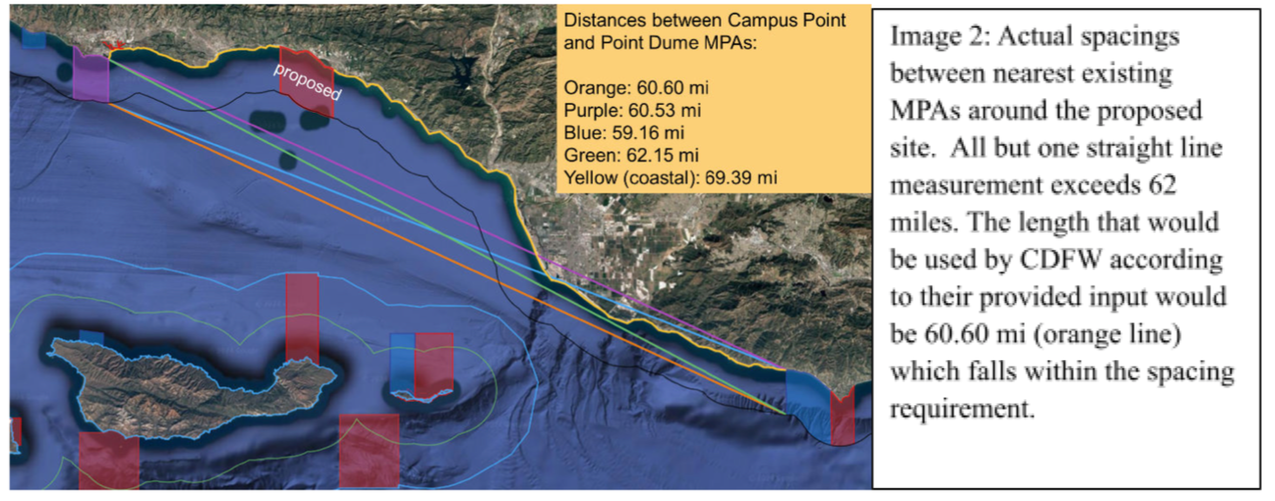
Following the CDFW and MLPA guidelines, the shortest water distance between the two existing MPAs is ~60.60 miles, viewable by the orange line. This distance falls within the 31–62-mile MLPA spacing requirement. None of the provided measurements, including a measurement along the coastline (yellow) exceeded 73.4 miles of separation as the petitioner claims, again bringing into question the purpose for the new MPA if connectivity is already met.
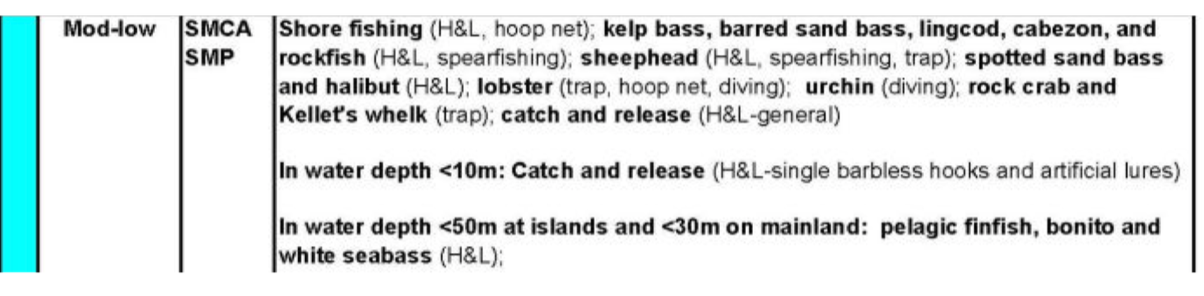
In addition, the provided shore based take of finfish does allow for some form of recreational take but this now raises connectivity concerns. As mentioned in previous petitions, allowance of shore fishing of finfish reduces an MPAs LOP to moderate-low, losing its MPA connectivity with the network, this is confirmed by SeaSketch. Connectivity was a major reason for this MPAs proposal. With connectivity now lost due to these allowed take methods begs to question the purpose for this implementation in the first place if its foundational goals are not even accomplished. The LOP chart for the southern bioregion, moderate low protection is provided below.
Regarding the protection of juvenile white shark nursery grounds, a similar petition was submitted in 2020 (Petition 2020-012 AM1) to close off a smaller section of beach at Carpinteria for the same purpose. Like Petition 29, this earlier petition aimed to protect
juvenile white sharks within the currently proposed area. This 2020 petition was rejected by the Department and the Fish and Game Commission (FGC), which stated that MPAs are designed to protect nearshore ecosystems rather than individual species, especially highly migratory species like white sharks. Given that this issue was previously addressed at the same location just four years ago, the same arguments against the current petition apply today regarding white sharks.
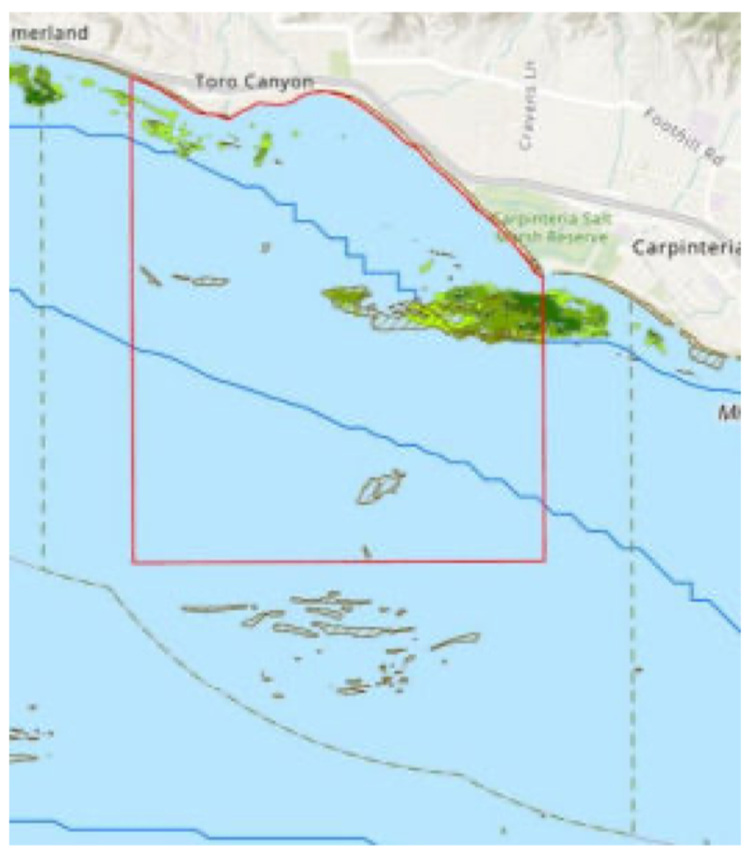
Lastly, regarding the tribal access portions of the petition, while tribal access and co-management should be explored across the entire MPA network, current access to the area by tribes is not limited in any way. Regardless of a tribal MPA designation or not, federally recognized tribes will have access in the area just like the public. Closing this area off to all groups except those of the federally recognized Santa Ynez Band of Chumash Indians would have the additional side effect of restricting any non-federally recognized tribes, as the petition does mention. In addition to the above counter reasons of the petition’s primary claims, there exists additional effects to be considered at the proposed MPA site. The proposed area was considered during the MLPA for the southern section but was
traded off for two other SMCAs on the coast, Naples and Kashtayit that were present in different MPA alternatives that Carpinteria was not in. If allowed, the new MPA would essentially break the agreements struck during the MLPA. Lastly, the pre- and post- amended boundaries overlap existing oil infrastructure that is maintained year round, no existing exemptions or conversations have been had regarding this infrastructure overlap. For these reasons we believe the petition should be denied.
What can i do?
Sign on to the coalition letter to the California Fish & Game Commission rejecting this and other petitions wanting to create new and expand existing MPA’s.
Write your own comment letter to the CA Fish and Game Commission
Show up to the MPA meetings on May 5 & 6 at the hilton garden inn, goleta.
may 5 is when this petition and all other coastal petitions will be discussed!!
may 6 is when northern channel islands petitions will be discussed